
This post contains affiliate links. An affiliate link means I may earn advertising/referral fees if you make a purchase through my link, without any extra cost to you. It helps to keep this little blog afloat. Thanks for your support!
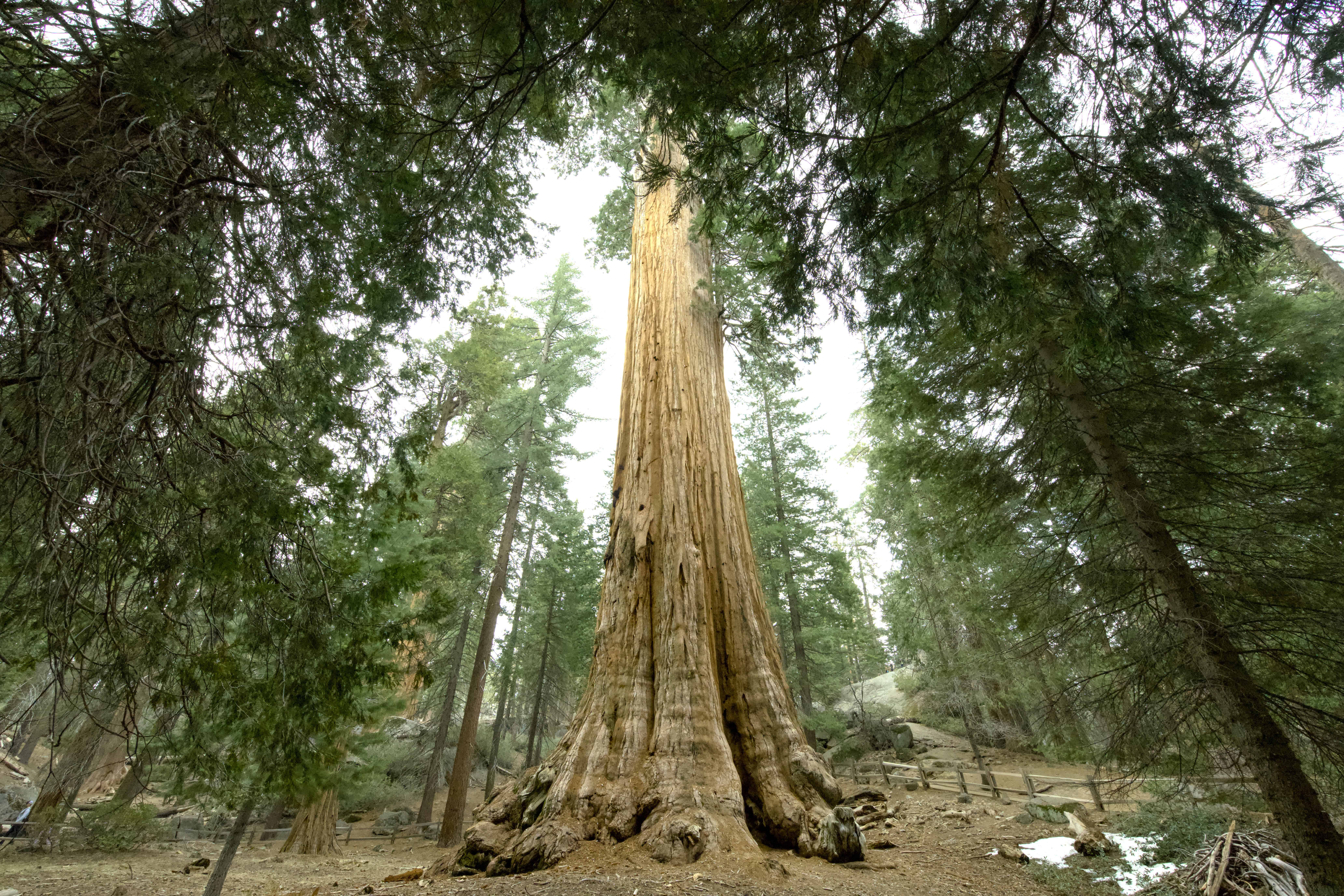
There are some places that make kids stop in their tracks. Sequoia and Kings Canyon National Parks are definitely those kinds of places. You can show your kids pictures of giant trees, but nothing compares to watching them stand at the base of one and realize just how tiny they are.
This is the kind of California adventure every family should experience at least once. No long lines, no overpriced snacks, no screens needed—just crisp mountain air, quiet trails, massive trees, and the kind of wonder that makes everyone look up.
Why Sequoia and Kings Canyon Are So Special
Sequoia and Kings Canyon National Parks are home to some of the largest trees on Earth, along with deep canyons, mountain views, waterfalls, caverns, meadows, and peaceful forest trails. The National Park Service describes the parks as a place of “huge mountains, rugged foothills, deep canyons, vast caverns, and the world’s largest trees,” which is exactly what makes this trip feel so different from a typical family getaway.
For families, the best part is that many of the most unforgettable stops don’t require an intense hike. You can see the General Sherman Tree, walk part of the Congress Trail, visit the General Grant Tree, and explore Big Stump Trail without needing to be serious backpackers. It still feels adventurous, but it’s very doable with kids if you plan your day well.
Can You Visit Sequoia and Kings Canyon in One Day?
Yes, you can visit both parks in one day, but you need to be realistic. Sequoia and Kings Canyon are connected, yet the driving can take longer than people expect, especially with mountain roads, weather, parking, and photo stops. If you only have 24 hours, focus on a few unforgettable experiences instead of trying to see everything.
A great one-day plan is to start with the General Sherman Tree in Sequoia National Park, hike a little deeper into the Giant Forest on the Congress Trail, then drive toward Kings Canyon to see the General Grant Tree and Big Stump Trail. The General Sherman Tree Trail is paved and runs about half a mile down to the tree, while the Congress Trail begins near Sherman and gives you a quieter way to experience more of the Giant Forest.
Stop 1: General Sherman Tree
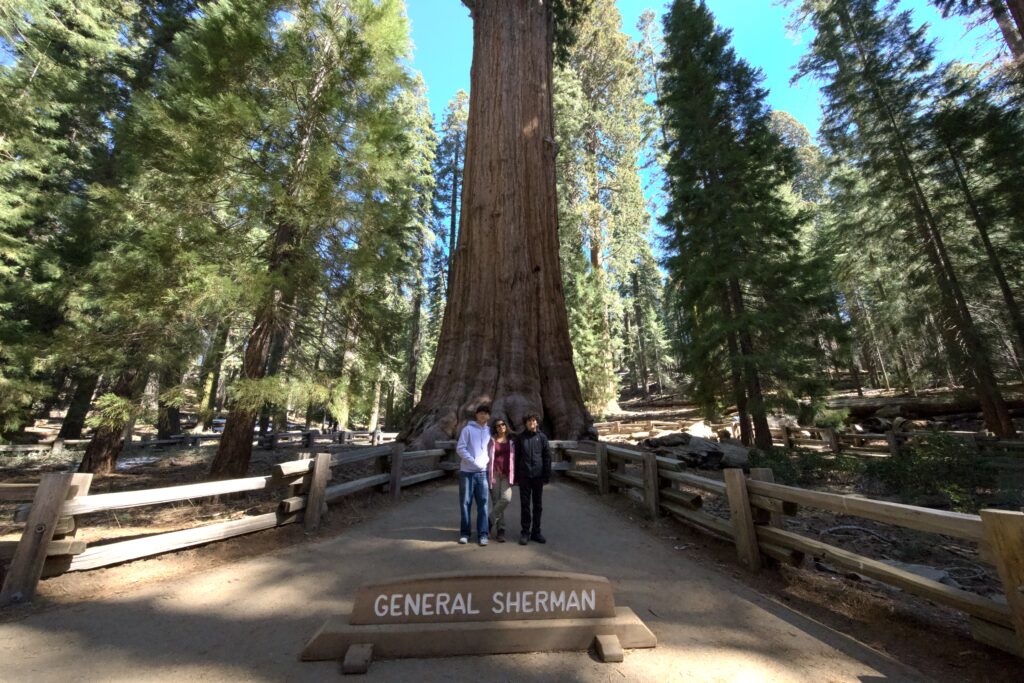
If you’re visiting Sequoia National Park for the first time, the General Sherman Tree is the must-see stop. It’s the largest known living single-stem tree by volume, and standing in front of it is one of those moments that really does live up to the hype. Even kids who think they’re “not into hiking” usually get quiet when they see it.
Go early if you can. The light is softer, the crowds are lighter, and the whole forest feels calmer. This is also a great place to start because it gives everyone that big “wow” moment right away.
Stop 2: Congress Trail
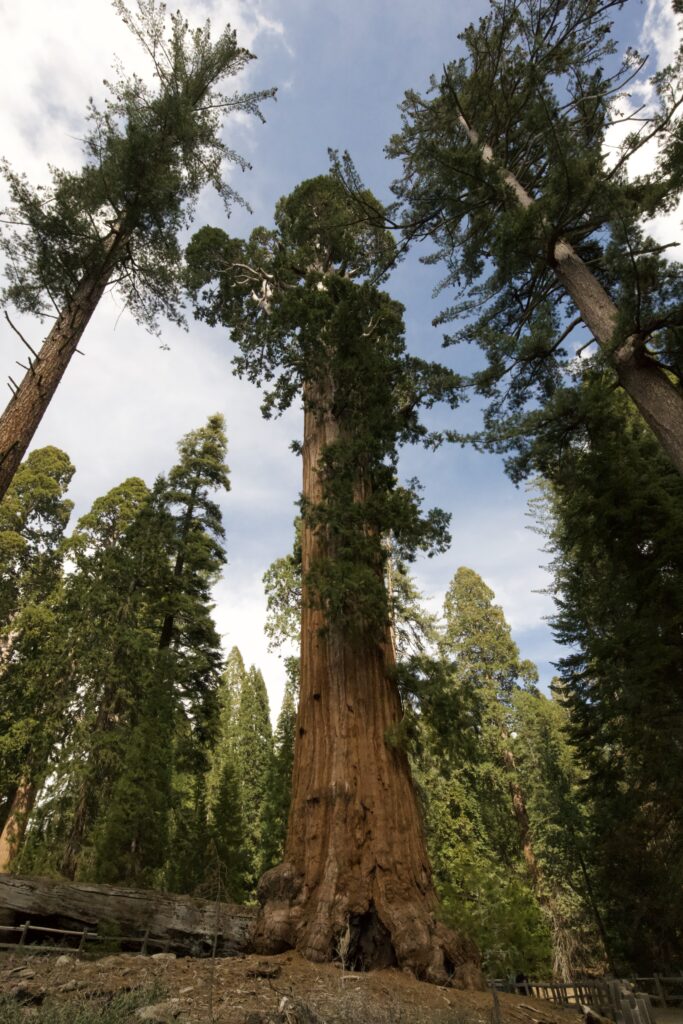
After seeing General Sherman, don’t turn around immediately. Take at least part of the Congress Trail, which leads deeper into the Giant Forest and gives you a much more peaceful experience. This is where the park starts to feel less like a famous landmark and more like a living cathedral.
The trees known as “The House” and “The Senate” are especially impressive, and kids tend to love the names. It’s an easy way to make the trail feel like a discovery instead of just another walk. If your family is short on time or energy, you don’t have to do the whole loop—just hiking a portion of it is worth it.
Stop 3: General Grant Tree in Kings Canyon
From Sequoia, head toward Kings Canyon National Park and visit the General Grant Tree. This is another giant sequoia that deserves a place on your itinerary, especially because the trail is short and family-friendly. The National Park Service lists the General Grant Tree Trail as a paved loop of about one-third of a mile, with other features nearby including the Gamlin Cabin, Fallen Monarch, and Centennial Stump.
This is also a good place for kids because the loop gives them a variety of things to see without feeling too long. You get massive trees, a bit of history, and a trail that works well even if everyone is starting to get tired. It’s one of the easiest ways to experience Kings Canyon if your schedule is tight.
Stop 4: Big Stump Trail and the Mark Twain Stump
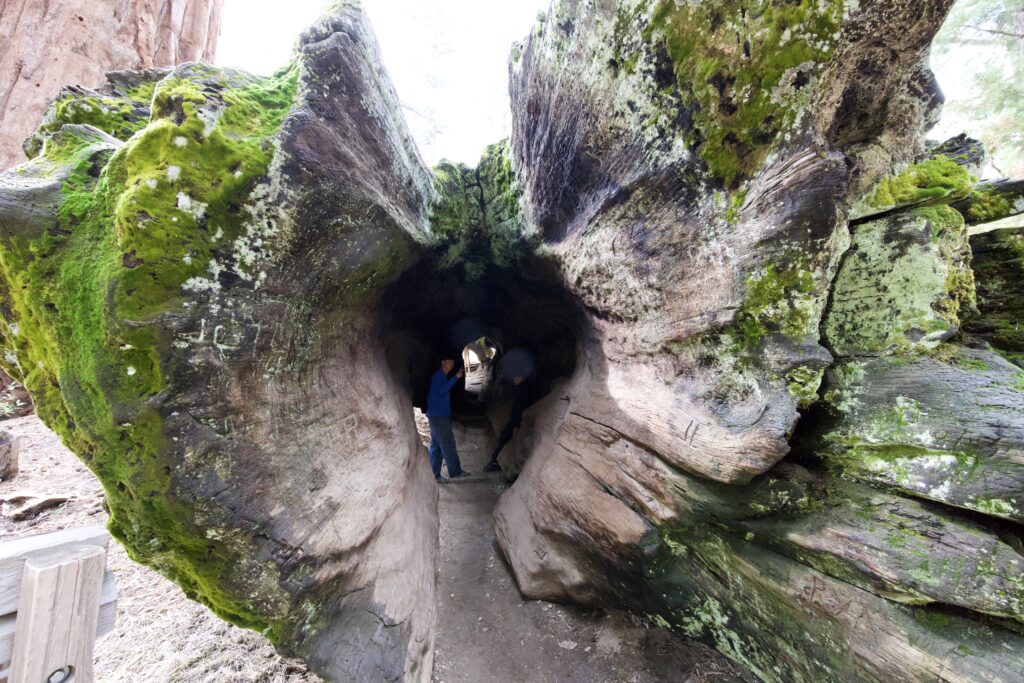
Big Stump Trail might be one of the most underrated stops in Kings Canyon. Hidden near the entrance to the park, this trail gives families a totally different perspective on the giant sequoias. Instead of only seeing living giants, you also see the remains of enormous trees that were logged before people fully understood their ecological value.
The most famous stop here is the Mark Twain Stump. The original Mark Twain Tree was cut down in 1891 so sections could be displayed in New York and London, because many people at the time couldn’t believe trees this large actually existed. Today, the stump remains along Big Stump Trail, and the National Park Service notes that the trail from Big Stump Picnic Area leads to the Mark Twain Stump on a roughly 2-mile hike.
This is the kind of stop kids remember because they can physically understand the size of the tree. Seeing a giant stump, stepping around hollowed remnants, and realizing that a tree could be large enough to feel like a room makes the history real. It’s beautiful, but it’s also humbling.
Why Big Stump Trail Is Worth the Detour
Big Stump Trail is more than a pretty forest walk. It’s a conservation story you can actually walk through. The huge stumps, younger sequoias, interpretive signs, and quiet forest setting all help show what was lost—and what was saved.
It’s also a nice contrast to the busier marquee stops. General Sherman and General Grant are iconic, but Big Stump Trail feels more reflective. It’s a place where kids can ask questions about logging, fire, preservation, and why national parks matter.
Spring Tips for Visiting
Spring can be a magical time to visit Sequoia and Kings Canyon. You may get clear skies, patches of snow, crisp air, and fewer crowds than the busy summer season. The mix of green forest, lingering snow, and mountain light makes everything feel extra special.
That said, spring weather can change fast. The National Park Service warns that tire chains or cables are often required on park roads from fall through spring, and chains can be required at other times if snow falls. Always check current road and weather updates before you go, because chain rules and closures can change quickly.
What to Bring
Waterproof hiking shoes are a smart choice, especially in early spring when trails can be wet, muddy, icy, or snowy in spots. You probably won’t need snowshoes for the main family-friendly stops in typical spring conditions, but dry feet make a huge difference. Merrell-style waterproof hikers or similar shoes are perfect for this kind of trip.
Bring layers, water, snacks, sunscreen, a small trash bag, and patience for the driving. If you’re visiting during a season when snow is possible, bring tire chains or rent them before entering the mountains. Fresno can be a good place to rent chains, but don’t assume they’ll always be available at the last minute.
Extra Stops If You Have More Time
If you have more than 24 hours, there’s so much more to explore. Boyden Cavern is a fun underground adventure in the Kings Canyon area, though it’s seasonal and depends on Highway 180 access. The cavern’s operators note that Highway 180 closes in winter and that season dates can vary based on weather and road conditions.
Families can also add Roaring River Falls, Grizzly Falls, Hume Lake, Zumwalt Meadow, or Mist Falls depending on the season, road access, and how much hiking everyone wants to do. The NPS trip planner lists Roaring River Falls as a short hike from Highway 180, while Mist Falls is a much bigger adventure from the Cedar Grove/Road’s End area.
Leave No Trace
The trees here may look indestructible, but they’re not. Stay on marked trails, don’t climb where signs tell you not to, pack out your trash, and keep kids from trampling fragile areas around tree roots. These parks are magical because people protected them, and it’s our job to help keep them that way.
That’s also part of what makes this trip meaningful for kids. They don’t just get to see something amazing—they get to understand that beautiful places need care. A family trip like this can teach wonder, responsibility, patience, and confidence all at once.
If you’re looking for a California family adventure that feels unforgettable without being complicated, put Sequoia and Kings Canyon on your list. Walk among the biggest trees on Earth, stand inside history at Big Stump Trail, breathe the mountain air, and let your kids experience the kind of wonder no ride or screen can replace.


